Saturday, June 4, 2016

The Ultimate Guide to Boseong, South Korea: Sleep It!

Sorry, we've moved!

No Excuses Just Travel has recently relocated to http://www.noexcusesjusttravel.org.  
To read the Ultimate Boseong Guide post about lodging, please click HERE to be redirected!


Thanks, and happy travels!
~Nomadic Madda

Friday, May 27, 2016

The Ultimate Guide to Boseong, South Korea: Find It!

Sorry, we've moved!

No Excuses Just Travel has recently relocated to http://www.noexcusesjusttravel.org.  
To read the Ultimate Boseong Guide post on access and transport, please click HERE to be redirected!


Thanks, and happy travels!
~Nomadic Madda

Friday, May 13, 2016

City Highlights: Waxing in Gwangju

Sorry, we've moved!

No Excuses Just Travel has recently relocated to http://www.noexcusesjusttravel.org.  
To read about waxing services in Gwangju, please click HERE to be redirected!


Thanks, and happy travels!
~Nomadic Madda

Friday, February 19, 2016

Winter Vacation 2016: Kurokawa, Japan (Part III)

Sorry, we've moved!

No Excuses Just Travel has recently relocated to http://www.noexcusesjusttravel.org.  
To read about our trip to Kurokawa, Japan during winter vacation, please click HERE to be redirected!


Thanks, and happy travels!
~Nomadic Madda

Friday, February 12, 2016

Winter Vacation 2016: Yufuin, Japan

The next morning, we pulled ourselves together and headed for brunch at Yoshizuka Unagiya (博多名代 吉塚うなぎ屋), which specializes in unagi (eel) dishes.  It was incredibly well seasoned and full of classically Japanese flavors.  The restaurant opens at 11AM, and while we couldn’t get a reservation, we were told that if we came and waited right when they opened, we could get a table.  When we arrived at 10:50, they were already open and had many tables seated!  We were able to get one right away at 11AM.


Eel and miso soup for breakfast. Really tasty!

Our bus to Yufuin left at 12:30, so we ended up timing things perfectly.  We had pre-purchased bus passes to use that allowed us to pre-reserve seats for all of our trips.  I highly recommend getting them, as they allow you to hop on and off the inner city buses as well all throughout the Northern Kyushu area!

What had been an overcast morning turned into a steady drizzle by the time we boarded out bus.  It made for a rather pretty ride though, creating rolling waves of mist and fog between mountain peaks.  I love the glimpses of traditional Japanese villages nestled into the crooks of mountains as well.


On the bus to Yufuin!

Friday, February 5, 2016

Winter Vacation 2016: Fukuoka, Japan

With winter camp finished, winter vacation periods for foreign English teachers have begun!  For the first part of my trip, I made a trip back to Japan.  Last year my friend Rory and I went to the Kansai region of Japan to visit the old capital city of Kyoto and the food mecca Osaka.  This year, J and I made a trip to the Kyushu island region where we experienced Japanese onsen (hot spring) culture.

Even though it was only 4 days, our trip took us to three different cities and dipped into three different prefectures: Fukuoka City in Fukuoka Prefecture, Yufuin in Oita Prefecture, and Kurokawa Onsen in Kumamoto Prefecture.

Our first stop in Fukuoka City reminded me so much of why I love Japan.  There’s something about the analog-esque feel of this country that I really love, from the bus stations to the cars on the streets to the local fashion.  You can frequently spot western influences throughout, though they seem as if they’ve been taken from 1970’s North America and England and have since grown into something uniquely Japanese.

After arriving at the airport, I quickly grabbed a (highly-anticipated) hot royal milk tea from the convenience store before we hopped our bus into the city.  Once downtown near Tenjin (天神), it was a short eight minute walk to our hotel where we were right on time for check-in.


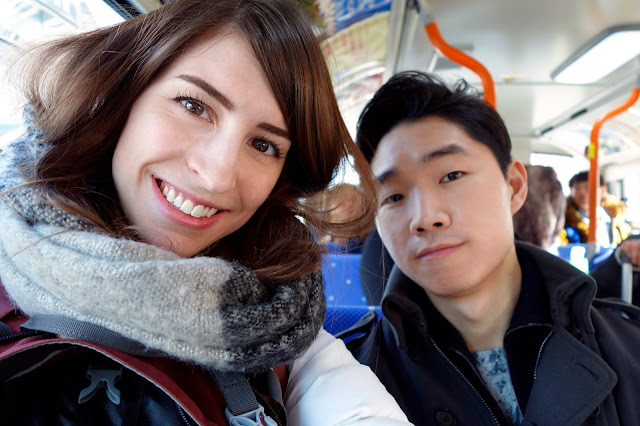
On a local bus, heading downtown from the airport.


Friday, January 15, 2016

English Camps in Korea & How To Develop A Successful One

The idea of coursework during summer and winter vacations is quite foreign to most westerners--as is a school year that starts in March!  Unlike the west, schools in Korea begin their school year on or around March 1st.  Students are then in school until the end of July, taking their summer vacation throughout the month of August.  The second semester spans from the end of August until Christmas, and the students have a long winter break for all of January.  Weirdly enough, they come back for the first week of February for graduation, but then go on break again (for Lunar New Year) until the new school year begins in March.

However, students aren't free to relax, go on vacation, or even really get much of a break during these "vacation" periods because they are required to attend "camps".  Camps (and for us native English teachers, English camps, specifically) are additional special courses that students must enroll in during their summer and winter vacation times.


This is similar to how kindergarten started out as completely optional in the USA--wait.  Did you even know kindergarten was optional in the USA?  In fact, even today only 16 states mandate kindergarten enrollment!  Today, kindergarten is seen as such a norm and necessity we don't even question the idea of enrolling our children in it.  Parents don't want their children to be "left behind" their classmates academically and socially upon entering 1st grade, so the idea not enrolling them isn't even given a second thought.

This is essentially the mentality behind Korean summer and winter courses, as well as the hagwon  (학원: Korean private school/academy) obsession pushed upon Korean students today.  Parents, and many times even the students themselves, are so obsessed with getting that extra leg-up against their peers that they're willing to sacrifice nearly any and all free time.  Of course (just like kindergarten enrollment in the States), when everyone does it, it eventually becomes expected.  To not attend winter or summer camp would be seen as quite strange or lazy.

Most native English teachers (NETs) are asked to teach two weeks of camp in the winter, and two in the summer.  Some schools condense it into one, and others have even extended it into three or four.  It all depends on the needs of the school and the teacher's mandated vacation time, which is why teachers at different schools will have different breaks and camp requirements.  As contracted public school teachers in Jeollanamdo, our contracts entitle us to 24 paid vacation days in winter and 8 in summer.   This means that for the long winter break of January and February, any days that are not in my 24 approved days I must be in school as I'm being paid for them.  Most schools will have teachers "desk warm" during that time (no classes to teach, just required to be present in the office), though the school has the right to utilize us for camp classes during those days if they so desire.

Friday, January 8, 2016

City Highlights: Shopping in Gwangju

While my switch from apparel design and production to linguistics and the ESL world may have seemed abrupt, I certainly haven't left the world of fashion entirely!  Shopping is still one of my favorite aspects of travel, and I love discovering the unique aesthetics and styles of each city and country I travel through.
Korea has been inching its way into the fashion spotlight over the last few years, especially in terms of street style.  While foreigners often think of Japan as being a more experimental and fashion-forward center of Asian street style, after traveling the two countries that doesn't seem to be the case.  Japanese subcultures and their extreme fashion are certainly more "out there" than Korean fashion, but when you look at the average Japanese street crowd, you'll find a lot of black, grey, and navy and the same dull business suits and skirts shuffling past.
Korea, on the other hand, has become extremely experimental.  Still conformist in the sense that trends are followed with a herd-like mentality, but the fashions that catch on here seem to be far more expressive and flamboyant.  For example, a current trend this past fall/winter 2015 has been cropped pants.  For Korean men, this is exhibited in the form of a very slim, tailored pant that ends short, just above the ankle, and is paired with either (often contrasting) socks or bare skin.  A more casual alternative is a cuffed skinny jean, achieving the same look.

A photo posted by @wanshiki on
A photo posted by Kyunghun Kim (@halopeoplekr) on
Three young Korean men showing the cropped pant look, featuring cuffed denim, bare ankles, sneakers, socks, and boots. Five young Korean men showing the biggest trends for this fall: slim, tailored, cropped pants; wool overcoats in a variety of colors; sweaters layered over collared shirts, and bare ankles peeking out over leather dress shoes.


For women, the cropped pant trend manifests itself in the form of culottes, where the comes in a wider variety of patterns and colors. Koreans aren't afraid to incorporate these trends into their work wardrobes, and many professionals can be seen with fun pops of color, patterns, and on-trend tailoring influencing even the most conservative of business dress.

A photo posted by SOL-SOL Street (@solsolstreet) on
A woman at Seoul Fashion Week shows off her boldly patterned culottes (cropped, wide-leg pants) and a chunky knit sweater. A young professional shows how bold fashion has pushed business wear in Korea. Note the unique cut to her button down shirt; loud, printed skirt; and bold accessory choices.

With Koreans quickly embracing fashion as a form of self-expression and stepping out of the old shadows of conformity, shopping in Korea is more exciting than ever.  While there are a plethora of resources and shopping guides available for Seoul and Busan, I didn't see too much out there for some of the other larger cities in Korea.  After living in Jeollanamdo for the last year and a half, I've become a frequent visitor (and shopper) in the downtown Chungjangro (충장로) area of Gwangju (광주).  I recently went and visited my 12 favorite shops in the area, which I have marked out on the map below:

Friday, January 1, 2016

Cosmetic Procedures & Dermatology in Korea Part III: The Results

ATTENTION: 
This post contains before and after images of the procedures I had done.  They are not graphic, but are cropped, close-up, and high-definition images of skin and hair, including some near the bikini area.

So was it worth it?!  For those of you who have been following my skin care and cosmetic journey, you're likely already aware of the procedures I had done two months ago.  For those who aren't you can catch up on my first post detailing my search for a clinic, and my second post detailing what the actual procedures and process were like.

So let's get into it!  At the end of November, I scheduled a variety of appointments at Dr. Han & Woo's Skin Clinic with Dr. Geun-soo Lee.  He performed the following:
  • Broken red blood vessel removal with the Starlux laser
  • Botox injections in the forehead
  • Laser hair removal on my underarms and bikini with the Candela laser
And down in the aesthetics center I had a facial for the removal of milia.  Dr. Lee only works in the laser center, so even though he did my consultation and I booked my facial through him, I was directed to a professional in that area for the actual service.  Anyway!  My results were as follows:

Red Blood Vessel Removal
Area: Face
Equipment used: Starlux laser
Happy?: Yes, very!


Before and after, from left to right.

This was really effective for me!  I initially wanted to spot treat some really obvious areas (two of which you can see just below my curve of my nostril, and then off to the left on my cheek), but Dr. Lee treated the inner area of my nose as well.  I didn't even realize this was all from blood vessels, but the treatment with the Starlux laser was definitely effective!  I hardly even need my green tinted primer anymore.  My cheeks still have a bit of general red, but that's something to be treated with a mini-Fraxel session or IPL on another day.  My only complaint about this is that this area on the bridge of my nose is still red and there's one tiny spot near my eye that we missed, but my nose might not be broken blood vessels and may therefore need a different kind of treatment, like my cheek.

Friday, December 25, 2015

Cosmetic Procedures & Dermatology in Korea Part II: The Procedures

Alright.  So you've done your research, picked your clinic, and have scheduled your appointment for your cosmetic services in Korea.  (If you haven't done so yet, read my first post on plastic surgery and cosmetic dermatology services in Korea for foreigners!)  For my first round of procedures, I chose Dr. Woo and Hann's Skin Clinic (우태하 한승경 피부과) located in Galweol, Yongsan.  Since I live about 5 hours from Seoul, I came up Friday night and scheduled a Saturday morning appointment.  For convenience, I stayed at the Kimchee Seoul Station Guesthouse since it's located right behind the clinic.

Saturday morning, I rolled out of bed (no makeup allowed!) and around the corner to the clinic.  At 9am, clients had already begun to filter in.  I checked in on the 3rd floor (Laser Center) for my 9:30 appointment.  The staff was very prompt, and had me pay before beginning any of my treatments that day.  After having a quick second consultation with Dr. Lee to recap our plan for the day, I was taken into the Laser Center area itself.  There, a woman who spoke English very well took me to a small locker room and gave me a gown and a robe to change into.  Everything was very neat and tidy, and was split between two rooms.  The main area was a powder room with sinks, toiletries, and a large mirror while the other, smaller area was for changing.  The changing area had around 12 large lockers in which guests could safely store their clothing and belongings while receiving treatments.  The assistant told me to wash my face as well, but because I didn't have any makeup on, she said just rinsing with water was fine.

Good morning!  This is the pink (under layer) and blue (top layer) robe set I was given to wear.

TIP: Don't wear makeup if anything on your face is being treated!
You'll just have to wash it all off anyway, and they only provide soap to do so.
My skin is pretty sensitive, so washing with soap is a pretty big no-no. 

As I would be having laser hair removal on my bikini, I undressed completely under the gown and robe.  If you're having treatments where they'll need to access your arms or underarms, make sure they give you a pink under layer that is sleeveless!  The blue robe with sleeves goes over the pink, and there are slippers located underneath the link.

When I stepped back out of the locker room, my "guide" was ready with another assistant to escort me down the hall to one of the treatment rooms.  The first room I was taken to wasn't particularly large in size, but was equipped with a medical reclining chair and some equipment.  My second assistant didn't speak much English, but I discovered the purpose of this room was to apply all of the numbing cream in my treatment areas.  She covered my underarms, bikini line (awkward!), and forehead.  The broken blood vessels to be treated on my face were not numbed.  When she finished, I was left to sit for 30 minutes while the cream took effect.

Sitting and waiting for my treatment to start...

TIP: You can bring your phone with you.  Both my gown and robe had pockets,
and I was really bored sitting for 30 minutes with nothing to do!

After thumbing through a few of the Korean fashion magazines stacked beside me, my quiet assistant returned and scraped off all of the cream.  She then took me to a similar, neighboring room for the broken blood vessel treatment.  Dr. Lee came in with yet another assistant, and they got right to work.  If there's one thing I'll say about Dr. Woo & Hann's Skin Clinic, it's that they're a very well-oiled machine!  Here's how my treatments went:

Friday, December 18, 2015

Cosmetic Procedures & Dermatology in Korea Part I: The Consultations

One of the many floor-to-ceiling ads that plasters the walls of Sinsa Station.
Caption reads: "Perfect! Looking beautiful."

Often lauded as the "Plastic Surgery Capital of the World," South Korea has become notorious for its obsession with picking out and correcting flaws--especially in women.  The country controls a whopping 16 trillion of the world's 21 trillion market share--that's 76% of the industry on a global scale!  South Korea doesn't have the highest number of people getting plastic surgery (they're still topped by the USA and Brazil [PDF]), but they do have the highest rate of plastic surgery per capita.  It is often the expertise and wide variety of cosmetic surgeons and dermatologists that draws thousands of foreigners to South Korea, expressly for their services, each year.  In 2014 alone, 336,224 foreigners visited cosmetic clinics in Korea. While there are plenty of plastic surgery options for foreigners in South Korea, over 70% of the foreigners from the 2014 statistic were from China.


Yes, this is the same woman.
Some Chinese tourists have been held up by airport security for not resembling their passports
after having plastic surgery in Korea!

South Korea, being an Asian country with a predominantly Asian population, is specifically known for its technical expertise in operations and procedures for classically Asian features.  While there are many English articles that suggest traveling to South Korea for cosmetic work, I think this is an incredibly important distinction for anyone with non-Asian features interested in getting work done here.  It's imperative that if you are planning on having an invasive (re: surgical) procedure that you find a doctor that has extensive experience working with features similar to yours.

This warning should also extend to anyone with fair hair or darker skin who is interested in laser skin and hair treatments, as many South Korean doctors have worked almost exclusively with patients who have fair skin and dark hair.  The other day a blonde-haired girl in a women's expat group said she had been contacting Korean doctors about electrolysis, and couldn't find anyone who offered services.  Common laser hair removal methods aren't effective on light hair, but because the doctors here rarely work with blonde clients for laser hair removal, they typically don't see a high demand for alternative methods.

Alright, so let's say you're interested in non-invasive cosmetic procedures (non-Asian features won't be a factor), you have fair skin and dark hair (unique treatment methods won't be a factor) and you've traveled to or live in South Korea.  Hello, you are me.


Actually, this is me.  Like, straight up; without makeup or editing.  Hello, internet!

Friday, September 25, 2015

Same Town, Same Year...New School!

Wow, long time no blog, hey?

As I'm still sitting here in the tea fields, you can safely assume I've renewed for another year of teaching down here in Boseong, Jeollanamdo.  I had a great year at my elementary schools and high school, and the town of Boseong truly feels like home.  When it came time to renew my contract, there was no doubt I wanted to do a second year!

Sadly, funding was cut for my elementary school at the county level, so I wasn't able to stay there for a second year.  What followed were some rather anxious few months as I waited to hear from my coordinator (and probably drove him crazy) about my new school.  I had initially applied for a switch to an elementary school in Suncheon, but the day before our new placements were officially announced, my old co-teacher from my vocational high school reached out to me.  Her new school, the academy high school in Boseong, had received unexpected funding for a Native English Teacher (NET)!  We had a quick get-together that evening after school and decided to call the main office first thing the next morning to catch them before making the placement announcements.  Somehow, all the pieces fell into place and I was able to stay in Boseong!  As great as Suncheon would have been, staying in a town I knew in my same apartment and working with a co-teacher I know I already get along with fantastically just seemed like the most logical choice.

Now I am happily settled in at my new high school, which is just across the river from my apartment complex.  This school hasn't had a NET since 2010, so both the students and staff were buzzing on the day of my arrival.  Especially the students, who are absolutely adorable and so polite.  Judging from their reactions, you'd think I was Beyonce or Taylor Swift!  The boys battle one another to say hello, and the girls shyly wave and dissolve into a mess of giggled when I say, "Hi!" in return.  I even got a marriage proposal on my second day, but all the girls in the class told him they wouldn't "accept" our relationship as he was unworthy. Poor guy!  They crushed his dreams harder and far more swiftly than even I could!  I'm sure it will all die down by the end of the semester as I go from Dazzling Celebrity Foreigner to Regular English Teacher.

The school itself is beautiful--it looks like something out of a Korean TV drama!  The campus is fairly large, and there are many new buildings.  As an academy high school, there are dorms for students who live in the countryside or whose parents want them to focus more on their studies.  Our classes begin at 8:30AM and while 7th period ends at 4:15PM, the students don't get to go home until 10PM or sometimes even 11PM!  Both lunch and dinner are served on campus, and students spend their evenings in "self-study," which is supervised by teachers.  In fact, many of the teachers who live 30-60min away in Gwangju actually stay in the teacher's dorm building during the week because of their supervision duties.  Both the students and teachers work very hard and incredibly long hours.

Yes, this is actually my school.  Yes, it actually looks like this.  Who said country living wasn't cool?

Friday, June 19, 2015

Stereotypes & Cultural Differences: Parenting in South Korea

As my first year here in Korea inches toward a close, I feel as though I've finally experienced enough of Korean culture to comment on repeated observations I've made while living here.  Some of the biggest stereotypes of Koreans and Korean culture involve parents. If you ask someone from a western country to describe what they imagine parents in Korea to be like, you'll often get the image of some English-obsessed mother who storms into school to yell at teachers and principals for inadequate grades and forces their child into hours and hours of hagwon every day after regular school lets out.

Obviously stereotypes exist for a reason, and there are unfortunately some parents out there who try to push their kids like this I'm sure this has to do with the fact that I'm in the country and down south, but I've found the majority of these to be untrue!  Here are some of the most common stereotypes of Korean parents, and how I've found they actually manifest themselves.

South Korean parents all want their children to grow up to be doctors or business professionals.

There are countless popular dramas in Korea that take place in and glorify the medical world.
Out of all the stereotypes I have here, this one probably still hold the most truth.  There are a lot of parents who still push their children to become doctors and businessmen and women, or work for Samsung or LG.  "What do you do for a living?" and "How much money do you make?" are common questions my Korean friends are asked by both their parents' friends and even their own peers.  Even dramas seem to be obsessed with doctors and the chaebols of the business world.  I suspect this is still fairly prevalent in Seoul, but I've actually found this to not necessarily be the case in the south.

When I ask my students what they want to be when they grow up, numerous times I've gotten illustrator, diplomat, game designer or programmer, and athlete.  While some of these seem like typical childhood dreams, I find diplomat in particular to be interesting.  More than one student has mentioned this to me, at both the elementary and high school level.  If there's one thing you can say has been successful about the English program in Korea, it's that it has inspired Korea's younger generations to take more of an interest in the world outside of Korea.  Also, I think it's worth noting that none of them wanted to be Kpop stars!

Friday, June 12, 2015

English Teachers' Orientation: What to Expect (And What Not To)

Every job--even within the same field--will be different.  And every orientation, even within the same company, can be different.  Some throw you out there on your first day and watch as you sink or swim.  Others hold your hand and hammer their way of doing things into your head, denying you any freedom to experiment and improve the system.

No comment.

I've held a variety of jobs  and participated in a range of activities over the last decade, and I've experienced countless orientations that fall all over this spectrum.  When I came to Korea in August of 2014 to teach English as a second language, I didn't know where our program's orientation would entail or how much it would or wouldn't help me in my new teaching job.  Obviously even within the same orientation everyone's personal experience of it will be different, but here is what I took away from mine:

DON'T EXPECT everyone to be on the same level.  There were some people I met that I was incredibly impressed with.  One girl spoke gorgeously fluent Korean (and blew away all the Korean co-teachers at our introduction!), and others still had years of teaching experience or were working on Master's degrees while abroad.  And others were new, just like me.  In fact, you may even meet some people whose qualifications you strongly question, but at the end of the day, take everything as a learning opportunity.  Pick up good tips from the more experienced teachers and learn what not to do from those who set bad examples.  You have control over what kind of teacher you want to be!

DO EXPECT to meet some awesome people.  Not only are you all in the same boat, but that boat is floating in a foreign sea, and you're all feeling equally out of place.  Orientation sort of feels like being a freshman in college all over again--friend groups are formed, everyone is a little awkward and out of their element, and no one wants to seem like they don't know what they're doing.  But everyone is new to something--whether it's teaching, or Korea, or both.  Orientation is a huge opportunity to make friends...and go visit them in their respective placement cities later!

Friday, April 24, 2015

Spring Has Sprung: Korean Flower Festivals

If there's one area Korea takes first place in, hands down, it's festivals.  They have festivals for everything, and it all really kicks off in spring.  A few weekends ago, Lorna and I explored the island of Jindo, where they had the Jindo Sea Parting Festival (진도 신비의바닷길축제)--you can read about our experience here!  Slowly but surely, over the last three weeks flowers have begun to bloom.  First were the bright yellow tangles of forsythia, followed by budding cherry blossoms.  Once the cherry blossoms started blooming, bright purple azaleas started slowly spreading throughout the mountains too.

Cherry blossoms beginning to bloom.

A mountain-top azalea bush.


Red cherry blossoms?  Not sure, but it was among a row of pink ones!

This weekend, there were two big festivals: one on Yeongchwisan (영취산), a mountain in Yeosu (여수); and another up in the mountains of  Gyeongsangnamdo's (경상남도) Hadong (하동) county, in a small town called Hwagae (화개).  Yeosu was our first stop, as we had friends there to meet up with Saturday evening after the flower viewing.

Friday, March 27, 2015

Walk like Moses: The Jindo Sea-Parting Miracle (Festival)


Despite our hectic schedules as we settle into the new school year, Lorna and I found time this weekend to venture across Jeollanamdo to the island of Jindo.  Every year, a festival is held to honor the legend of Grandmother Ppong and her escape from the island.

A statue of Grandmother Ppong and a tiger to commemorate her escape.
Long ago, on the island of Jindo, a group of villagers were constantly under the threat of vicious tiger attacks.  One day, they finally made their escape from the main island to the nearby island of Modo.  Unfortunately, in their haste, Grandmother Ppong was left behind.  All alone on the island and desperate to be reunited with her family, Grandmother Ppong prayed fervently to the Dragon King.  One night, he visited her in a dream, telling her he would create a rainbow reaching all the way to Modo Island and her family.  The next morning, Grandmother Ppong rushed to the sea to find it had indeed parted, creating a path for her to safely escape the tigers.  Halfway across, Grandmother Ppong collapsed, too old and exhausted to make the rest of her journey.  But her family had also been visited by the Dragon King, and and hurried to meet her on the sea path.  In the arms of her loved once, Grandmother Ppong said, "The Dragon Kind has granted my wish and reunited me with my family once again!  I could not ask for anything more in life!" before passing away.

Each year, locals, Koreans across the country, and many foreigners venture down to the island of Jindo to participate in commemorating Grandmother Ppong's escape from the tigers of Jindo and her faith in the Dragon King.  While I was initially wary of crossing a sea using the precious little footwear I have here in Korea, Lorna assured me waders could be purchased at the festival.  So, we hopped in the car and made the 120km (75mi) drive across the bottom corner of the country.

The event itself is a good 20min drive into the island itself, and we easily found it by following the trail of cars and buses.  The sea parting itself wasn't to peak until 6:10PM, so we had plenty of time to kill arriving at 12:30PM.  Right at the entrance, there was a man selling the infamous waders used to cross the sea. We nabbed a pair early on and tossed them in the car before heading in to check out the stalls.
Local Tip: They all cost ₩8,000, so it doesn't really matter where you buy them.  The stalls were all throughout the grounds and they didn't look to be running out, even right up until the parting!
Somehow, we managed to stumble into the international tents almost immediately.  Stalls representing Korea, Peru, India, America, Russia, Turkey, Germany, Japan, and others advertised food, drink, and occasionally crafts.  Ironically enough, the American booth was the least accurate out of all of them, selling Korean-style ice cream (served in a large, V-shaped corn tube instead of a cone) and Korean-style potato tornadoes.  Longing for my days in Japan, I immediately grabbed some takoyaki while Lorna went for the Korean chicken.

Clockwise from top: spicy Korean chicken, Japanese takoyaki, and Japanese okonomiyaki

Grapefruit juice, straight from the source!

We brought our snacks to the seaside, but were soon interrupted by a parade coming our way!  Drummers, dancers, and students in animal costumes lined up, preparing for the 3PM procession across the shoreline to the sea-parting point.  Some of the middle school students next to us shyly struck up conversation with us, and we ended up chatting with them for nearly an hour.  They were very punchy (typical of Korean kids) and kept tugging at each other's costumes and cracking up.  One poor boy who was an orca kept inadvertently whacking everyone with the tail of the whale worn on his head.  When we went to take a picture, one of the girls asked a boy dressed as a crab to snap it...only to have him sadly look at his hands--incapacitated by the costume's claws.

Friday, January 30, 2015

Winter Travels: A Diary

Sat. Jan 17th
7:00am
Awake, awake, awake.  Fiddling on my phone keeps me in bed an extra 10 minutes. I should consider teaching in a rural island community--the break from technology and the Internet would do me good. As much as it can be a blessing, I feel it sometimes stops me from seeing what's right in front of me. But for now, it's a useful tool for a last-minute checklist. 
Always running late. The trash didn't get taken out, but the apartment is clean and I seem to have everything I need for my trip. In the end I opted to bring my computer, which hopefully will be worth the weight and worry if I can keep busy and edit photos and videos.  I meant to leave 10 minutes ago, and while the bus station is close by car, I don't need a stressful repeat of my journey to Seoul two weeks ago. If there's one lesson I've learned in traveling, it's that one mistake in connecting transportation is like a butterfly flapping its wings: you never know what disastrous repercussions can come from something so seemingly small. 

7:50am
Boseong may be a small town, but there are always people bustling about.  The 직통 (direct bus) to Gwangju is filled with students, farmers, and a few of my fellow foreign teachers. Seats aren't assigned, and I'm lucky I managed to get one--several people end up standing in the aisle. I doze a bit, but am awoken by a very pungent, very Korean smell... Someone's decided kimchi is an appropriate breakfast food...

Friday, January 9, 2015

Korean Hospitals, Doctors, and Health Care

I'm six months in to my stay here, and it was bound to happen at some point.  Some good ol' Korean nasties have settled in my system and blessed me with a pretty brutal cough.  I'll spare you the details, but I'm typically a very healthy person and get over illnesses quickly.  So, once I hit the one-week point without seeing much progress, I decided it was time to see a doctor.

Korea has a fantastic health care system that even covers us native teachers during our contracts.  I think the cost and efficiency of this system comes as the biggest shock to Americans, who have exorbitant costs and wait times associated with hospital and doctors visits.  Here, when you mention that you're unwell, the first suggestion a Korean will make is that you go to the hospital.

The hospital?!  For a general visit or check up?!  It sounds strange to those of us from Western countries, who associate hospitals with serious medical issues, long-term stays, or emergencies.  But here in Korea, the hospital is the first stop when assessing your health problems.  Only after you've been checked out would you possibly receive a further recommendation to see a doctor, who is a specialist in a particular field.

Friday, December 12, 2014

My Korean Milestones

Coming to a new country and not knowing any of the language can be frustrating.  Here are some of the big milestones I've accomplished since coming to Korea:

Week 0 (July):
- Managed to catch a bus from Seoul to Daejeon and meet up with my friends before starving to death.
- Can say my friend's address in Korean and catch a taxi home on my own if necessary.

Week 1 (August):
- Can successfully navigate the subway in Seoul alone....although the stops are all written in English too, and I have a travel card I can top up.
- (Can't read or write)

Week 2: 
- Can order coffee or tea with the Konglish name (Korean pronunciation of English words), as well as beer and soju.
- Can navigate a familiar bus route on my own using my travel card.
- (Still can't read or write, still haven't eaten a meal alone)

Week 3:
- Can read consonant characters and a few vowels.
- Have picked up on a few Korean words and phrases.
- Can tell everyone my height in Korean.
- Am getting really good at charades.

Month 1 (September):
- Can properly greet, thank, and say good-bye to people using the correct level of politeness.
- Can read, albeit slowly and often without understanding what I'm saying.
- Slowly learning a few more phrases and getting used to using them every day.
- Am really, really good at charades.
- (Names are so, so hard to remember, you guys...)
- Can communicate with Korean guys when we go out to clubs.
- Have a pay-as-you-go phone
- Have a Korean bank account

Friday, November 28, 2014

Teaching in Rural Korea (And Why "One School" Sometimes Means "Three")

Before I left the USA, the one thing I was the most excited about was getting my placement.  I was constantly online searching all over Jeollanamdo (전라남도), trying to see what regions and cities there were, and what life was like there.  When I finally received my packet from Canadian Connections, I had been placed in my second choice: Boseong county (보성군)!

In hindsight, I'm actually very, very glad I ended up here and not Yeosu (여수), which was my first choice on my application.  Yeosu is a beautiful, larger costal town about a 75min drive from me, but nothing quite has the beauty and charm of a rural town in the Korean countryside.  Boseong county has a population of about 63,000, but the town of Boseong itself is only around 9,000-10,000.  It's actually around the same size as my hometown of Cedarburg, Wisconsin.

Swung by the tea fields on a rainy day...You can imagine what it looks like on a sunny one!  Stunning.

In total, those 63,000 people are spread out over 256mi^2, or (663km^2), which means once you leave the towns, it's relatively sparse.  Children have to be bused all over the region to attend school, and as a result, many schools have a very small number of students.  For us teachers, this often means teaching at more than one school.  This both cuts costs for the schools, since they split the cost of an English teacher among themselves, and makes it easier to ensure all students in the region are receiving English education with a native speaker.